














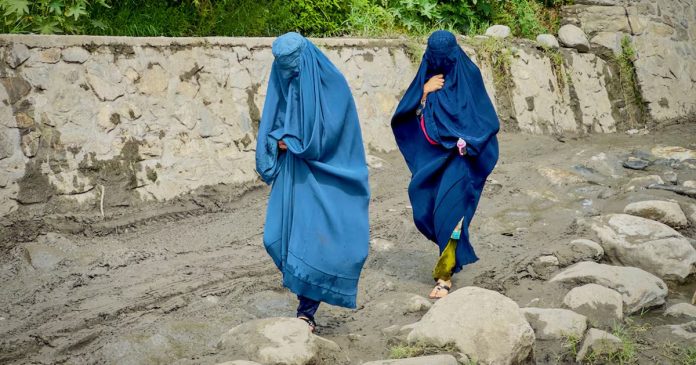

The World Health Organisation (WHO) has called on Taliban authorities to remove restrictions on Afghan female aid workers so they can travel without male guardians and provide help to women struggling for care after a powerful earthquake killed 2,200 people in eastern Afghanistan.
Dr. Mukta Sharma, deputy representative of WHO’s Afghanistan office, told Reuters, “A very big issue now is the increasing paucity of female staff in these places.” She said about 90 per cent of medical staff in the area are male, while the remaining 10 per cent are often midwives or nurses rather than doctors capable of treating serious wounds.
This shortage is limiting care because many women feel uncomfortable or afraid to interact with male staff or travel alone to receive medical help.
Earthquake Impact And Aid Gaps
The September 1 quake, with a magnitude of 6, and its aftershocks left more than 3,600 people injured and thousands homeless.
The disaster struck a country already suffering from severe aid cuts and multiple humanitarian crises since the Taliban took control in 2021.
The Afghan health ministry and Taliban spokesperson did not immediately respond to requests for comment.
The Taliban say they respect women’s rights in line with their interpretation of Islamic law and earlier claimed they would ensure women could receive aid. But in 2022, the administration ordered Afghan female NGO workers to stop working outside the home.
Although humanitarian officials say there have been some exemptions, mainly in health and education, these are limited and insufficient during an emergency that requires female staff to travel.
Dr. Sharma said the restrictions and mahram (male guardian) rules continue without formal exemptions, creating risks for aid agencies and female workers.
Concerns About Women’s Health
Dr. Sharma said, “That’s why we felt we had to advocate with [authorities] to say, this is the time you really need to have more female health workers present, let us bring them in, and let us search from other places where they’re available.”
She also expressed concern for women’s mental health after trauma, especially those who lost male relatives and now face strict rules without guardians.
Peer Gul, from Somai district in Kunar province, one of the worst-hit areas, said, “There is no female doctor for examinations; only one male doctor is available.”
He added that many women are suffering trauma and high blood pressure after the quake, but cannot access care.
Dr. Sharma also warned about the future, pointing out that the Taliban’s ban on girls attending high school and university has created a shortage of female doctors, with no new pipeline to replenish the workforce.
The United Nations estimates that around 11,600 pregnant women were also impacted by the earthquake in a country that already has some of the highest maternal mortality rates in Asia.
Funding Cuts and Damaged Facilities
Funding cuts, including those by the US administration this year, have further weakened the Afghan health system.
According to Dr. Sharma, around 80 health facilities in quake-hit areas had already closed earlier this year due to US aid cuts, and another 16 were forced to shut down after being damaged in the earthquake.
Stay tuned to Brandsynario for latest news and updates

 Join a Channel
 Brandsynario
 Veryfilmi