















Globally, education is considered a basic right, but not in Balochistan. Being the most neglected province, Balochistan is facing a concerning education crisis.
Despite being the country’s largest province by area, the province lags behind in access to all basic facilities, including education.
A Province Left Behind
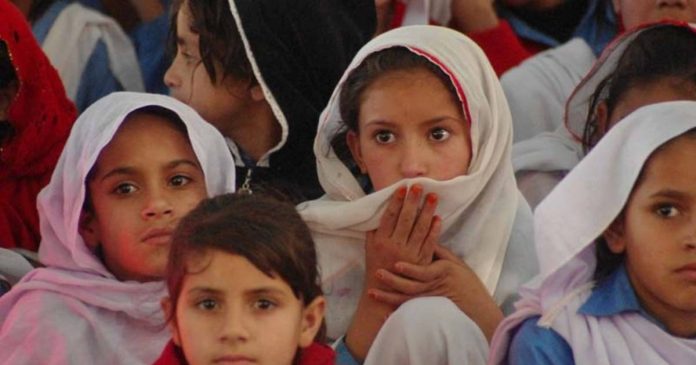
Balochistan has the lowest literacy rate in Pakistan, hovering around 40% compared to the national average of 62%. In rural districts, the numbers are even more alarming, with female literacy sinking below 25%. According to the Pakistan Bureau of Statistics, over 70% of the province’s children are out of school, with girls disproportionately affected.
For many children, the nearest school is miles away, often lacking basic infrastructure such as walls, toilets, or even teachers. In spite of an increase in the education budget, there are more than 7,000 multi-grade (from class 1 to 5), single-room schools with just a single teacher in Balochistan. These schools have no boundary walls and no such thing as individual attention or security.
In some cases, “ghost schools” exist only on paper, their budgets siphoned off by corruption while children study under open skies or abandon schooling altogether.
Security remains a prerequisite for progress. Military operations and insurgent attacks continue displacing thousands annually, disrupting exams and shuttering schools. “Peace and education are intertwined,” says Lt. Gen. (retd.) Nasser Khan Janjua, a security analyst.
“Stability will follow only when children have hope beyond militancy or labour.”
The Socioeconomic Cost
The problem is not just physical access. Deep-rooted socio-cultural norms, coupled with chronic insecurity, keep girls out of classrooms. Many families, struggling to make ends meet, prioritise child labour over education.
Where schools exist, they are often under-resourced, with outdated curricula and poorly trained teachers who are either absent or unmotivated.
This systemic neglect sends a clear message: education is not a right for the children of Balochistan.
The consequences of this go far beyond the walls of the classrooms. A poorly educated population undermines the province’s economic potential. For girls, the consequences are even more severe: early marriages, maternal health risks, and generations of women silenced before they could even raise their voices.
A Moral and National Imperative
The path to change is not complicated, but it requires political will and sustained investment.
For too long, Balochistan’s children have been denied the future that education promises. It is time to treat education not as a privilege doled out sparingly but as a birthright.
Because until every child in Balochistan can read, learn, and dream, Pakistan’s progress will remain a story of unfinished potential.
Stay tuned to Brandsynario for latest news and updates.

 Join a Channel
 Brandsynario
 Veryfilmi