















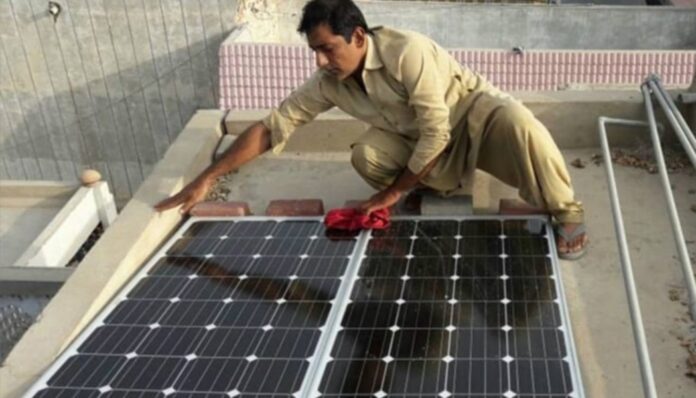

In a decision that has left solar panel owners upset, the Pakistani government has made drastic changes to its net metering policy, cutting benefits for new users by 63% and increasing electricity prices more than 550% above the old rates.
What the New Policy Entails
According to the new policy, the owners of rooftop solar panels will supply electricity to the national grid for as little as Rs10 per unit. But they have to purchase power at the then-existing rate of about Rs65 per unit. Previously, the system used to permit electricity generated by solar power to be netted against the units received from the national grid. But the new policy stops this netting facility altogether, raising costs for solar users by a great margin.
This significant policy change was endorsed by the Economic Coordination Committee (ECC) of the Cabinet, headed by Finance Minister Muhammad Aurangzeb. Moreover, technical specifications have been made stricter to limit low-quality solar panel installations.
Impact on Existing Users
Existing net-metered consumers possessing valid licenses and contracts under NEPRA’s 2015 regulations are exempt from this policy for the time being until their contracts lapse, with a maximum duration of seven years.
However, after these contracts expire, they will be at the mercy of the same detrimental terms, leaving many wondering why the government should be interested in encouraging renewable energy.
Government’s Justification
The government asserts this policy shift is to ease the financial burden on non-solar consumers. It contends that the growing number of solar panel users has caused a loss of about Rs101 billion in the last fiscal year, and this will increase to Rs545 billion by 2034.
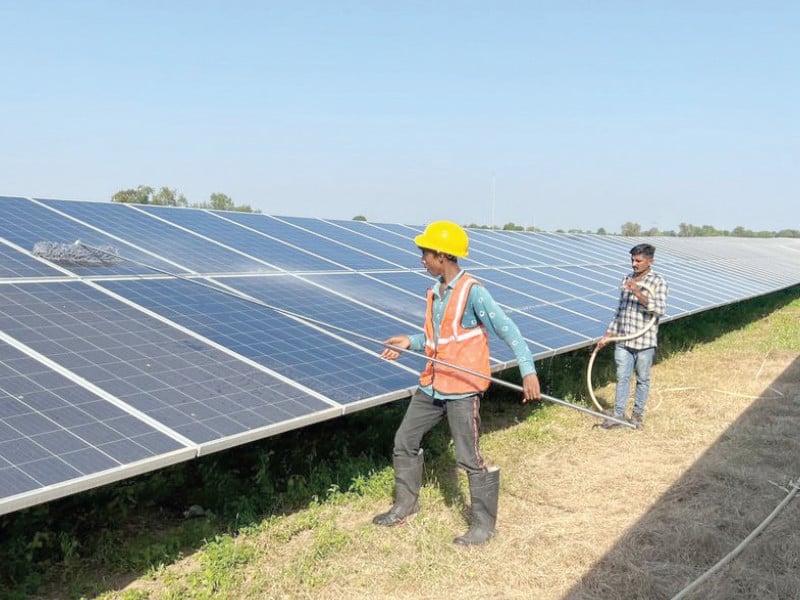
But critics argue that the government is turning a blind eye to the bigger problem of electricity theft, under-recovery of bills and payments for idle capacity, which cause yearly losses of about Rs600 billion.
Decreased Incentives, Higher Costs
The new policy also limits distributed generation capacity to a one-to-one ratio with the approved load, from the earlier 1.5 times. Additionally, the net-metering contract term has been shortened from seven years to five, with no option of cashing out surplus electricity; it can only be applied to future bills.
Read More: Solar Price in Pakistan: What’s the Cost of Going Green?
The policy change is bound to adversely affect the expansion of solar panel installations in Pakistan, which had accelerated from 5 MW in 2017 to 4,135 MW as of December 2024.
Stay tuned to Brandsynario for latest news and updates

 Join a Channel
 Brandsynario
 Veryfilmi