















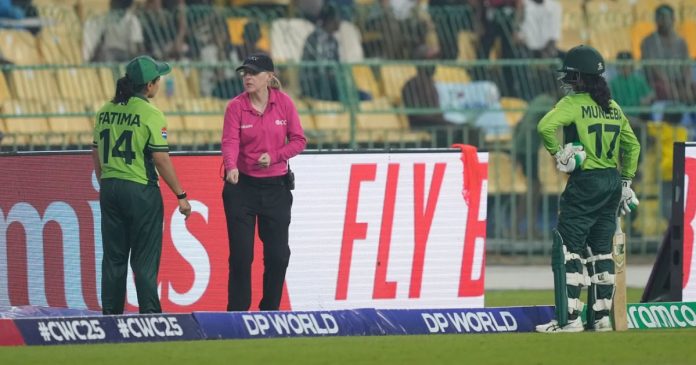

When it comes to Pakistan-India clashes, drama is almost guaranteed. The latest chapter came during the ICC Women’s World Cup 2025 in Colombo, where Pakistan batter Muneeba Ali was given run-out, sparking confusion, debate, and a fair bit of frustration.
It wasn’t your usual dismissal. It was one of those moments where cricket’s laws and its spirit didn’t quite seem to shake hands.
A Moment of Chaos in the Middle
Pakistan’s chase of 248 had barely begun when chaos unfolded in the fourth over. India’s Kranti Goud struck Muneeba on the pads, prompting a loud lbw appeal that was turned down. As the ball deflected into the offside, Deepti Sharma swooped in from slip and threw at the stumps, hitting them cleanly.
At first glance, Muneeba appeared safe. Her bat had touched the ground inside the crease. But as replays revealed, she had ever so slightly lifted it before the ball struck the stumps. That minor lift, no more than a flick of instinct, would end up changing the entire moment.
The fielders appealed again. Confusion rippled across the ground. Muneeba stayed near the boundary, unsure of her fate, while Pakistan’s players on the sidelines sought clarity.
The Third Umpire’s U-turn
The decision went upstairs to third umpire Kerrin Klaaste, who initially flashed “NOT OUT” on the big screen. The Pakistan camp relaxed. India’s players began returning to their positions. And then, suddenly, the screen changed.
The decision was reversed to “OUT” after Klaaste took another look and spotted the crucial moment when Muneeba’s bat had lifted off the ground. The change triggered cheers from the Indian side and disbelief from the Pakistani side.
Captain Fatima Sana was seen in an animated discussion with fourth umpire Kim Cotton near the boundary. Meanwhile, Sidra Amin, the next batter, hesitated to enter the field until clarity was reached. The whole episode dragged on for several minutes, far longer than a standard run-out review.
Was It Technically Out?
By the letter of the law, yes. But as with so many things in cricket, there’s a grey area.
According to Clause 30.1.2 of the Laws of Cricket, a batter is considered on their ground if they have grounded some part of their bat or body beyond the popping crease, unless they lose contact while running or diving back towards safety.
View this post on Instagram
In Muneeba’s case, she was doing neither. She wasn’t running or diving; she was simply stepping back after an LBW appeal. So when her bat momentarily left the ground, technically, she was out of her crease.
As commentator Mel Jones explained on air:
“She wasn’t running. She wasn’t diving. So because of that fact, there’s no running or diving, that is the reason she’s been given out.”
The Spirit vs The Letter
Here’s where things get tricky. Technically sound decisions can sometimes feel unsporting. Muneeba wasn’t trying to take a run. She wasn’t seeking an advantage. Her bat lifted only after grounding it, a natural reaction during any appeal.
It wasn’t a lapse in judgment so much as a moment of human instinct. And while rules are meant to ensure fairness, this one left a bitter aftertaste.
Perhaps what made it worse was the confusion. The third umpire’s two different signals, first “not out”, then “out,” amplified the sense of unfairness. For a global tournament, such a communication lapse feels inexcusable.
A Lawful Call, But a Lesson Too
Let’s be clear, by the book, the third umpire got it right. Yet, the incident once again exposes the fine line between law and fairness in modern cricket.
Technology has made decisions more accurate, yes, but it has also made them colder. There was a time when cricket lived by the spirit as much as the rulebook. Moments like these remind us how easy it is to lose that balance.
Muneeba Ali’s run-out will fade from memory in time, but it will remain an example of how the laws of cricket can sometimes feel harsher than the game itself.
Stay tuned to Brandsynario for the latest news and updates.