















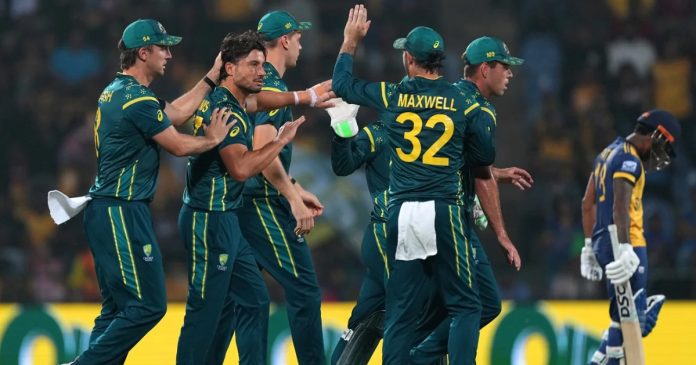

Sometimes a campaign does not end with a defeat, but with a quiet, unavoidable truth. On a grey Tuesday in Pallekele, a day-long drizzle ended the thin hopes of Australia in the T20 World Cup 2026 and confirmed Zimbabwe’s place in the Super Eight.
With Ireland and Zimbabwe sharing points after their washed-out clash, Zimbabwe moved to five points, safely out of Australia’s reach. Just like that, Group B was decided.
The Moment It Became Official
Sri Lanka had already sealed qualification after defeating Australia earlier. Now Zimbabwe join them as the second team from Group B.
Zimbabwe take Australia’s seeded slot and will now face West Indies in Mumbai on February 23, India in Chennai on February 26, and South Africa in Delhi on March 01.
Sri Lanka, meanwhile, continue their journey with England and New Zealand, while their final opponent will be either Pakistan or the USA, depending on the outcome of Pakistan’s clash with Namibia.
Australia, although eliminated from Super Eight contention, are not done yet. Australia still have a final T20 World Cup group match against Oman. However, it is now nothing more than a formality.
A Campaign That Slowly Fell Apart
So, where did it all go wrong for Australia? The frustration among fans back home has been intense, even though many followed matches through scorecards and brief highlights due to difficult viewing hours.
Much of the early criticism has targeted the selectors, particularly decisions surrounding the pace attack and Steven Smith. Yet the truth runs deeper than selection calls. This was not one mistake or one bad day. It was a slow unravelling.
Back in November, Australia’s T20 side looked strong and balanced. Their power-based batting unit complemented a disciplined attack that thrived in familiar conditions.
However, doubts remained about how this method would hold up in subcontinental conditions. Those doubts were never answered, because Australia never made it far enough.
The Turning Point – Hazlewood’s Injury
Josh Hazlewood’s hamstring injury in November may well have been the moment the campaign began to drift. Before that setback, he had been Australia’s most reliable powerplay weapon, taking wickets regularly while maintaining control.
Since his absence, Australia have struggled badly, losing seven of their last eight T20 internationals, with their only win coming against Ireland. Their long-standing powerplay bowling issue resurfaced again, something that had already haunted them in previous World Cups.
Against Zimbabwe in Colombo, the problem was clear. Australia lacked a wicket-taking threat, while their top order faltered against the pace and bounce of Blessing Muzarabani and Brad Evans. That defeat proved costly, perhaps decisive.
Batting Misfires and Selection Questions
Australia’s batting, once seen as their strength, failed to deliver when it mattered most. Travis Head’s Ashes heroics masked a prolonged dip in T20 form. His fifty against Sri Lanka was his first meaningful contribution in months.
Meanwhile, Inglis, Green and Maxwell have struggled badly, failing to produce consistent scores. Green was barely trusted with the ball, while Maxwell’s bowling role has almost faded, with no wickets in recent outings.
The selectors’ decision to persist with underperforming players, while limiting squad flexibility early in the tournament, now appears costly. Dropping Renshaw after he had been one of the few bright spots only added to the confusion.
Stay tuned to Brandsynario for the latest news and updates